- Government Approved Citizenship by Investment Project
- +1 767 448-5775
- info@anichidevelopment.com
-



Dominica 2026: The Institutional Transformation of the Tourism Sector
The first half of 2026 has cemented tourism’s role as a systemic driver of Dominica’s economy: the industry has moved towards a sustainable development model, transcending mere growth. Consequently, the perception of hospitality projects has shifted; they are no longer viewed as autonomous objects but are increasingly dependent on the macroeconomic and infrastructural environment.
The Anichi Resort & Spa project is developing within a system where demand and occupancy parameters rely on verified data rather than mere expectations.
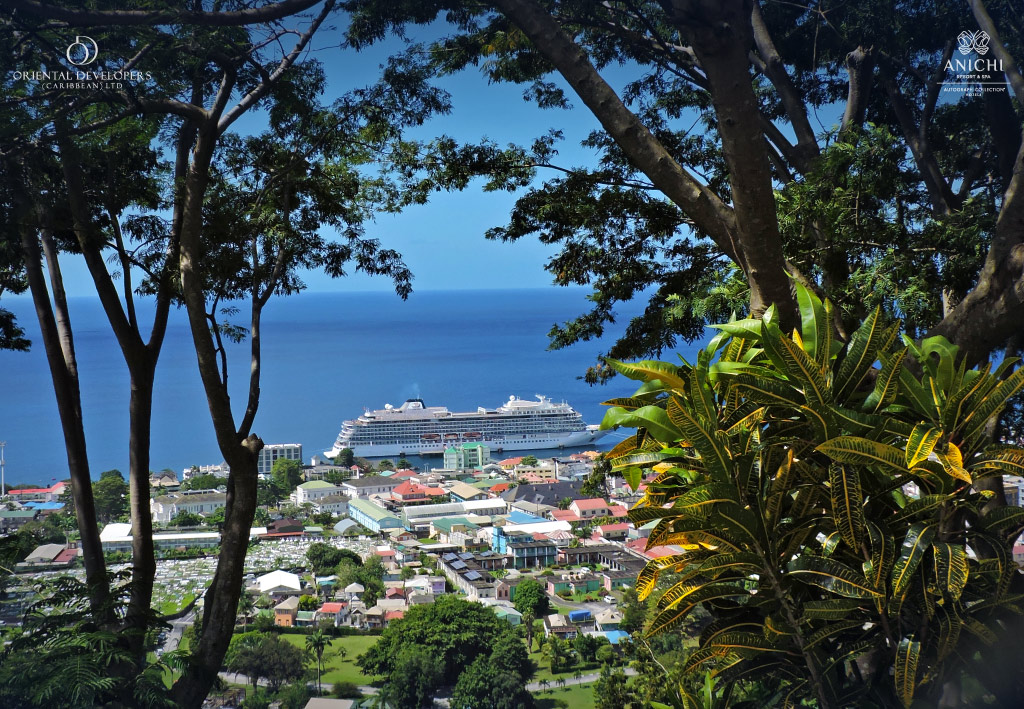
The most telling marker has been the dynamics of cruise tourism. According to official sources, Dominica welcomed approximately 395,950 cruise passengers during the October 2025 – April 2026 season. This represents an increase of around 42% over the previous season and an 81% rise above pre-pandemic levels.
An additional indicator of intensity is the number of calls: 244 per season, reflecting not only rising demand but also the capacity of port infrastructure to service it. Peak load is best illustrated by a weekly snapshot: in March 2026, the country handled over 14,400 passengers in a single week while simultaneously servicing 11 cruise vessels. These figures represent an operational density of tourist flow that infrastructure must manage in real-time.
In tandem with the cruise segment’s expansion, the state is systematically building an “event economy”. The official 2026–2027 national calendar features over 30 festivals and cultural events, spanning cultural tourism, wellness programmes, and eco-tourism formats. Crucially, these are not disjointed initiatives but a structured calendar that distributes demand throughout the year, smoothing seasonal peaks and making infrastructure occupancy more predictable.
Growth in tourism is accompanied by parallel investments in physical infrastructure. In 2026, government policy is concentrated on projects that directly impact the system’s throughput. One such project is the development of the Champagne Beach infrastructure, awarded a contract of EC$ 1.81 million to enhance access and service quality at one of the nation’s premier natural sites.
Simultaneously, the modernisation of port infrastructure and logistics hubs continues, increasing capacity for cruise arrivals and passenger processing efficiency. These structural changes are vital for the long-term resilience of an economy anchored in external visitor flows.
Viewed through a systemic lens, it is evident that Dominica is shaping an economic model where tourism ceases to be a cyclical sector and becomes a structural one. In this configuration, Anichi Resort & Spa should be seen not as an isolated development, but as a component of a broader tourism ecosystem.
For institutional investors, the primary benefit is a reduced reliance on short-term demand fluctuations and an increased role for structural factors: infrastructure, the regulatory environment, and long-term policy. The efficacy of hospitality assets, including Anichi Resort & Spa, is determined by the depth of their integration into the nation’s emerging tourism system.


