- Government Approved Citizenship by Investment Project
- +1 767 448-5775
- info@anichidevelopment.com
-



In institutional hospitality development, attention is often focused on land, architecture, branding or capital structure. However, there is a component that ultimately determines the functional performance of an asset over the long term – professional operational management.
The operational layer is not merely the final stage following construction or an addition to the project; rather, it is a structural element that translates the management framework and brand standards into daily practice. Without a professional operator, even a well-capitalised and branded property may face operational inefficiencies, unstable performance and reputational risks.
Development creates the physical asset.
The brand defines positioning and standards.
The capital structure provides financing.
However, it is the operator who:
In other words, the operator transforms a completed project into a functioning hotel business.
For institutional capital, this distinction is fundamental. A property without structured professional management is not yet an institutional-grade hotel asset – it remains a completed development project.
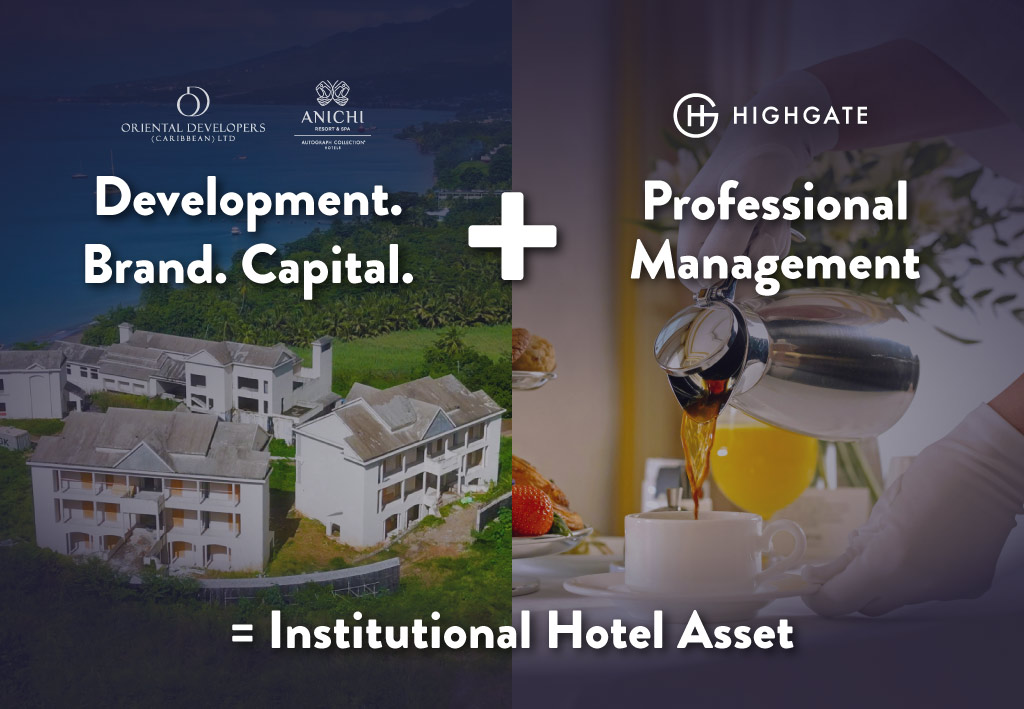
The Operational Layer of Anichi Resort & Spa
Professional management helps minimise several categories of risk.
Experienced operators rely on established systems, training standards and reporting procedures, reducing performance variability and shortening the stabilisation period following opening.
Hotel assets operate within a complex regulatory environment. A professional operator embeds compliance requirements into daily processes rather than treating them as formal periodic checks.
Service inconsistency or operational failures directly affect brand perception. Professional management implies structured quality control mechanisms and internal oversight.
Cost control, procurement systems, budgeting and revenue management are central to resilience. Institutional operators function within formalised financial procedures and transparent reporting frameworks.
For family offices and advisers, the presence of a professional operator serves as an indicator of operational reliability and governance maturity.
In branded hotel projects, the operator acts within the framework of brand standards. The brand defines positioning, quality requirements and distribution systems, while management ensures their practical implementation.
The separation of roles is critical:
Such delineation strengthens the institutional compatibility of the project and reduces concentration of control.
Professional management matters not only for operational performance, but also for structural explainability.
Investment committees, compliance departments and external advisers assess:
A formalised management model allows systematic answers to these questions and makes the asset understandable within institutional decision-making frameworks.
Without such a structure, a hotel project may be perceived as opaque or overly dependent on development-stage assumptions.
A hotel is an operating business, not a static asset. Its value is generated through service consistency, quality delivery, cost control and the ability to adapt to changing market conditions.
Professional operators provide:
Such operational discipline aligns with the expectations of institutional capital focused on resilience, transparency and long-term stability.
In institutional hotel development, professional management is not a marketing argument but a structural component of the asset.
The developer creates the project.
The brand defines the standards.
Regulators provide oversight.
The management company ensures the coordinated daily functioning of all these elements, transforming a completed property into a working hotel business.
When processes are documented, responsibilities allocated and reporting transparent, the asset becomes compatible with institutional evaluation frameworks.
This is precisely the model embedded in the structure of Anichi Resort & Spa. The project provides for operational management by Highgate, while the standards of positioning and quality are defined by the Autograph Collection Hotels brand under the aegis of Marriott International. The separation of roles between development, branding and management creates an independent operational framework embedded within corporate governance and regulatory oversight systems.
In this configuration, management is not a service function but an element of the project’s institutional architecture – ensuring process discipline, controllability and the long-term resilience of the asset.


