- Government Approved Citizenship by Investment Project
- +1 767 448-5775
- info@anichidevelopment.com
-



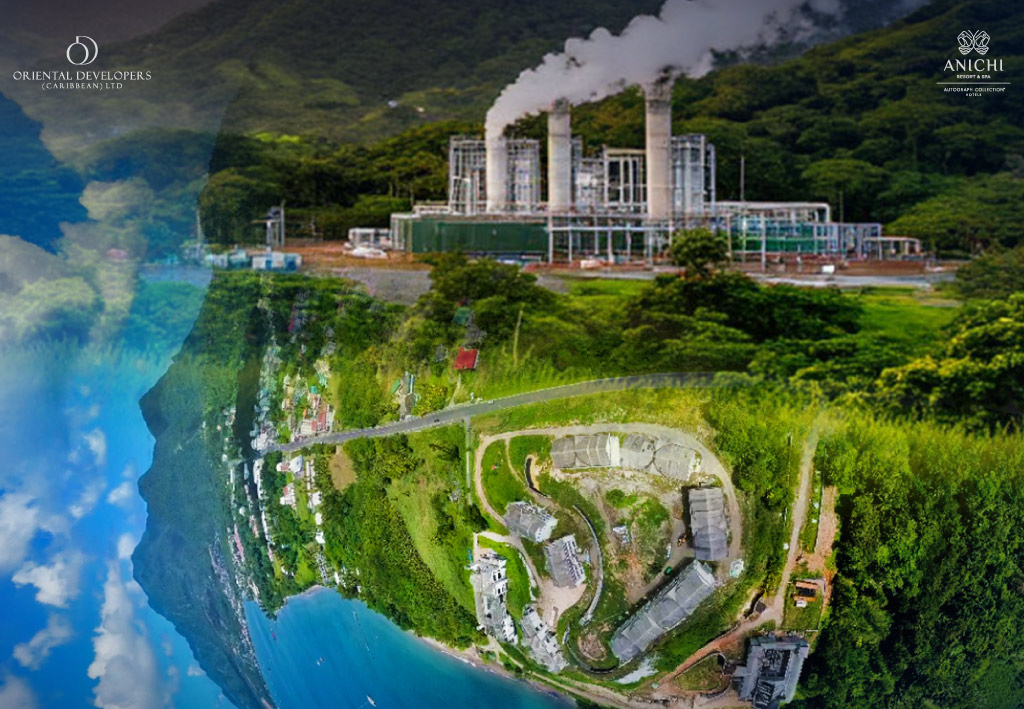
Dominica’s Energy Independence: How 2026 Tariff Reductions Bolster Investment Resilience
In global investment circles, infrastructure seldom captures public interest until it begins to dictate capital yields. In 2026, Dominica has reached precisely such a juncture: the commissioning of a geothermal power plant and the anticipated reduction in electricity tariffs are fostering more than just a new energy balance. They are establishing a fundamentally protected economic system with long-term implications for the property market, tourism, and the broader investment climate.
For investors, the significance of these shifts extends far beyond mere overheads.
Within a tourism-led economy, the cost of power directly dictates the competitiveness of assets. Resorts, residential estates, wellness centres, and hotel infrastructure operate under high energy demands: air conditioning, refrigeration, water systems, and digital infrastructure constitute a significant portion of core operating expenses.
When a power grid relies on imported fuel, businesses remain inevitably susceptible to external volatility: from fluctuations in Brent crude to geopolitical crises.
This is why Dominica’s transition to geothermal generation is of such strategic importance. It is not merely about lower tariffs, but about the gradual decoupling of the local economy from turbulent global energy cycles.
The 10MW geothermal plant is set to satisfy a substantial portion of domestic electricity demand. For the economy, this represents a shift toward a base-load power source immune to global oil prices and logistical bottlenecks.
Unlike traditional diesel generation, geothermal energy provides a stable load, reducing the influence of imported fuel on the final tariff. For businesses, this is particularly vital during periods of global price instability.
The expected reduction in electricity costs in 2026 is one of the first practical outcomes of this transformation. Yet, for investors, another factor is even more critical: the minimisation of unpredictable expenditure – a key pillar of reliable yield.
This energy transformation is steadily altering the economics of asset ownership.
Firstly, cost reductions improve the financial models of hospitality and residential projects without the need for aggressive price hikes for the end consumer.
Secondly, a more stable electricity cost renders businesses resilient to the sharp fluctuations of the fuel market. For investors, this translates into more predictable cash flows and higher precision in long-term financial forecasting.
Thirdly, a growing share of renewable energy bolsters Dominica’s positioning within the sustainable tourism segment – one of the fastest-growing niches in the global industry. International operators increasingly view an ecological profile not as a mere branding exercise, but as a component of an asset’s capitalisation.
For global capital, infrastructure projects carry weight beyond their immediate utility. They serve as an indicator of the quality of economic governance and the state’s capacity for long-term strategic development.
In this context, Dominica’s geothermal project is a compelling part of a broader economic transformation: modernising energy, enhancing utility reliability, and cultivating a more competitive business environment.
For real estate investors and participants in the Citizenship by Investment programme, this provides an additional layer of confidence. Investment attractiveness is defined not only by the quality of a specific property but by the stability of the economic environment in which that asset functions.
For years, the cost of energy remained a primary constraint on the efficiency of tourism-related real estate. Dominica is opting for a different concept – one built upon domestic renewable resources and independence from external factors.
For the market, this is a potent signal. As the energy system achieves greater stability, the perception of investment risk shifts accordingly.
Consequently, energy independence is becoming more than just an infrastructural objective; it is a genuine economic asset – one capable of fortifying long-term investment value and heightening Dominica’s appeal to international capital.
This is especially evident in next-generation projects designed for long-term operational efficiency. The Anichi Resort & Spa, under the Autograph Collection by Marriott International, stands to benefit directly from the country’s energy transformation. More stable tariffs, reduced oil-price sensitivity, and the shift to renewable generation provide the foundation for modern, energy-efficient luxury – a segment where an asset’s technological sophistication becomes an integral part of its investment value.


